
 English

Inlays, onlays, and overlays are effective solutions for tooth restoration with the help of intraoral imaging methods. In addition to these, dental crowns are a more comprehensive method. When crowns are not needed, one of these 3 dental restorations is preferred. But what is the difference between these treatments? Which treatment is more suitable for you? Read on to find out the answers to these questions.

What is inlay?
An inlay is used when the decayed part is in the centre of the chewing surface of the tooth. It fits into the space between the cusps but does not cover the tooth tips (cusps) or the outer edges of the tooth (marginal ridges). The dentist applies inlays when the vitality of the tooth is preserved and filling treatment is not effective.
What is onlay?
An onlay is a treatment that covers the inner part and 1 or more tooth cusps. Onlays are used when a more solid and pressure-resistant surface is needed. An alternative option is to use a filling. However, a dental filling does not provide durability and strength.
The onlay restores the strength of the tooth with its solid structure. Thus, it corrects the chewing function of the tooth and ensures the preservation of the natural tooth tissue. Finally, thanks to new technology devices, it is prepared in full compliance with the tooth.
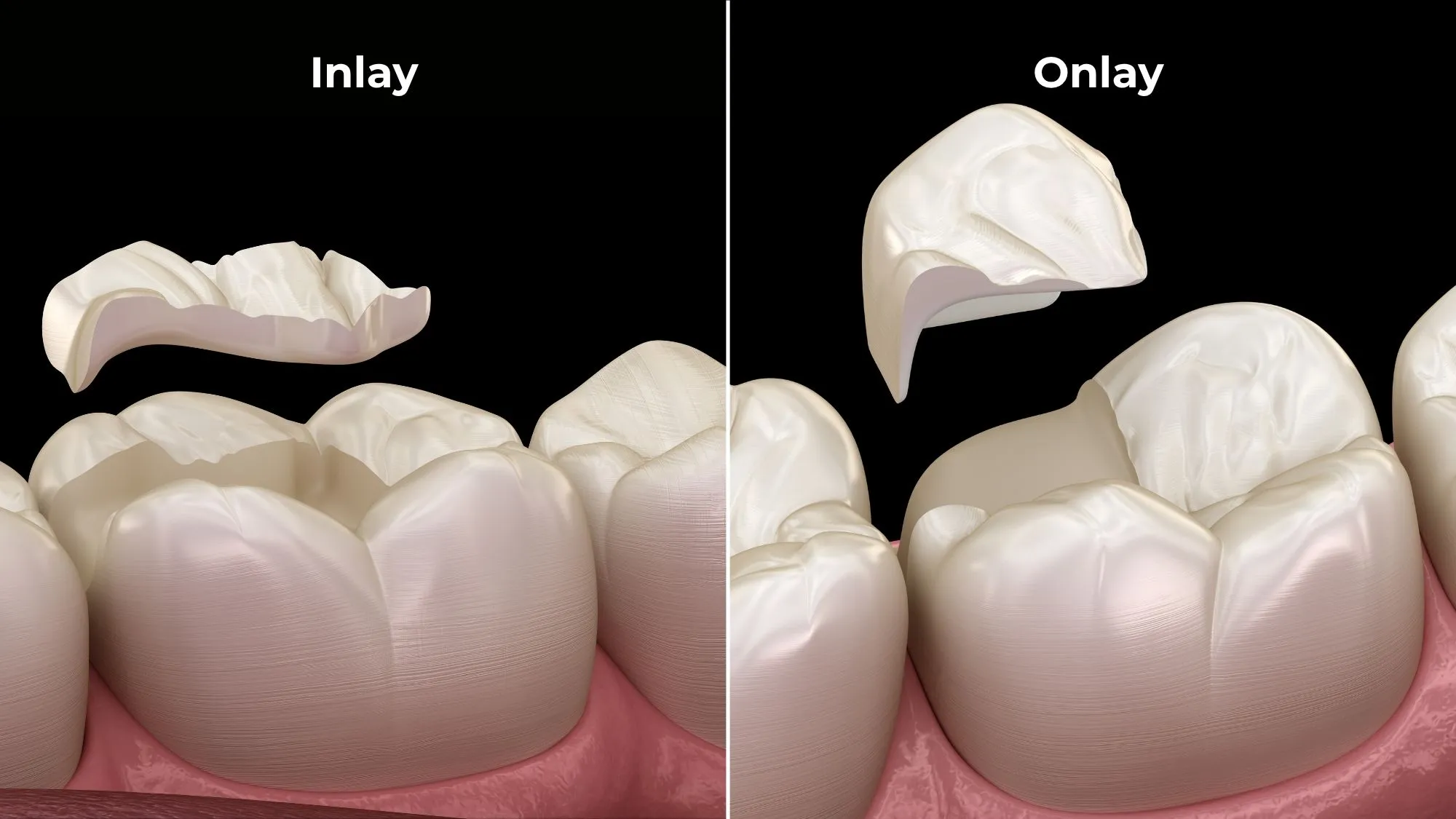
What is overlay?
An overlay (Partial crown) is a restoration applied when there is extensive damage to the tooth and crown treatment is not required. The overlay covers the entire chewing surface of the tooth and multiple cusps (the sharp projections at the top of the tooth).
The overlay is applied without completely reducing the tooth since the overlay is a more protective solution. It strengthens the tooth and provides long-lasting protection.
What are pros and cons Inlays, onlays, and overlays?
Pros
They focus on preserving the natural tooth structure and repairing only the damaged areas.
Made from durable materials such as ceramic and gold, these treatments offer long-lasting results.
They provide an aesthetic appearance because they are custom-made to match the natural tooth colour exactly.
Thanks to advanced imaging technology, they are precisely designed to fit each patient.
They fit perfectly with the natural tooth for optimal comfort and function.
Cons
They are more expensive than traditional dental fillings.
Inlay, onlay, and overlay treatments usually require two dental visits.
How are an inlay, onlay and procedure performed?
A Turkish dentist first cleans the damaged parts of the tooth and removes any decay. Then, the shape of the tooth is captured using a digital scanner. To prevent sensitivity, a temporary filling is placed. The scan is sent to the dental laboratory, where technicians prepare the final restoration.
At the second visit, the dentist removes the temporary filling and checks the fit of the restoration on the tooth. Once the fit is confirmed, the restoration is fixed in place using dental cement and then polished for a natural look.
How to care for your treated tooth restorations
After receiving an inlay, onlay, or overlay, proper care is essential for long-lasting results. Here are some important tips:
Brush gently using a soft toothbrush and circular motions. Pay extra attention when cleaning around the restoration to prevent plaque build-up.
Avoid hard and sticky foods, as they can cause the restoration to loosen or break. Although these restorations are stronger than regular fillings, they are not as durable as natural teeth.
Smoking is harmful to both teeth and gums and can cause discolouration of the restoration over time.
Which material is best for tooth restorations?
The most commonly used materials for inlay, onlay and overlay treatments are as follows:
Zirconia
It is resistant to pressure. This is ideal for increasing strength, especially in molar teeth. It adapts to the tooth in terms of aesthetics. It is not understood that there is a restoration on your tooth. If the damage to the tooth is severe, you can consider it as a more durable solution.
Composite resin
Composite resins have a porous structure and are suitable for short- to medium-term use. They offer a practical solution for smaller tooth damage and cavities. Damage that occur in the composite over time can be easily repaired. Inlay, onlay and overlay treatments prepared using composite are completed on the same day.
Gold
Gold is at the forefront with its durability. For this reason, it was frequently used in dental crowns in previous years. However, today, options that offer a combination of durability and aesthetics are more common. This has minimised gold tooth restorations.
If we classify according to the intended use; zirconium for aesthetic and long-lasting use, composite resins can be preferred for more economical and short-term solutions.
Choosing the Right Restoration: Inlay, Onlay, or Overlay?
If you're unsure which type of restoration is right for you, it often depends on the size of the tooth damage, the tooth's location, and your long-term oral health goals. A small cavity on the biting surface only requires an inlay, while more complex damage might call for an onlay or overlay. In cases where the tooth is severely damaged or fragile, your dentist recommends a crown instead. When it comes to material choice, your dentist will favour zirconia for durability and composite for economical solutions.
Turkey has become a popular destination for dental care, especially for patients from the UK and Europe. Many clinics offer high-quality restorations at affordable prices, often with shorter wait times than in your home country. Treatments such as inlays, onlays, and overlays are performed by experienced dentists, many of whom speak fluent English and are trained in international standards.
Ultimately, choosing the right restoration isn't just about the material or method — it's about preserving your natural smile with the help of the right professional care.